
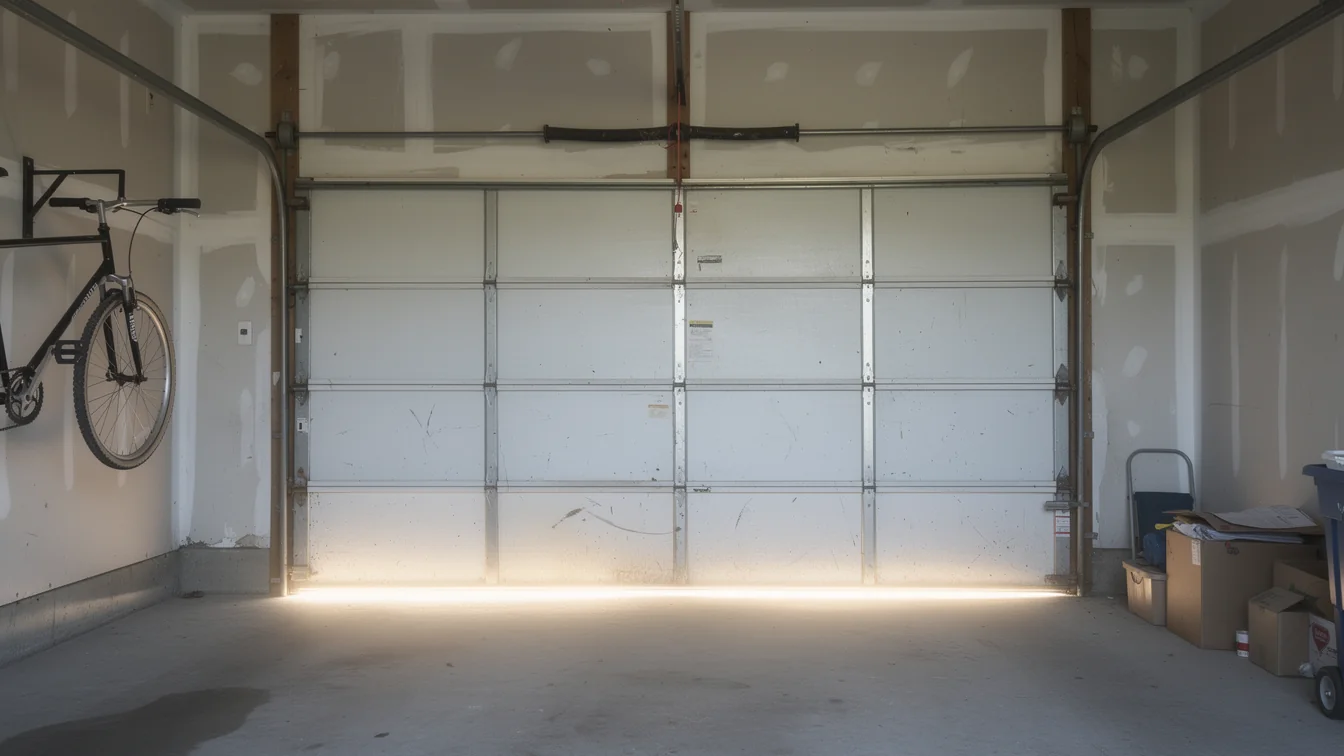
Why Your Lake City Garage Door Isn't Like a New One
Most Lake City garage doors date to the 1970s-90s build boom, before insulation codes existed.
Read moreMost Lake City homes date to 1972-1994, with original garage door hardware. Here's how that stock and our mild, occasional-freeze winters affect repairs.
Local detail
Most houses we work on in Lake City were built between 1972 and 1994, with the median build year sitting right at 1982. That means a lot of the original garage door hardware - torsion springs, rollers, the first opener ever bolted to the ceiling - is still out there, forty-plus years old in some cases. Across the four areas we cover most, Five Points, Watertown, White Springs, and Fort White, the stock runs similar: 1980s and 90s construction, single or two-car garages, standard door openings built to the codes of that era, not today's.
Out of the roughly 2,236 households in our service area, about 759 are owner-occupied houses - the kind where a door gets used twice a day, every day, by the same family, on hardware nobody's ever had a reason to look at. That's the baseline problem here: aging gear on a house that otherwise looks fine, waiting for the one cold morning or one too many cycles to show it.
The area
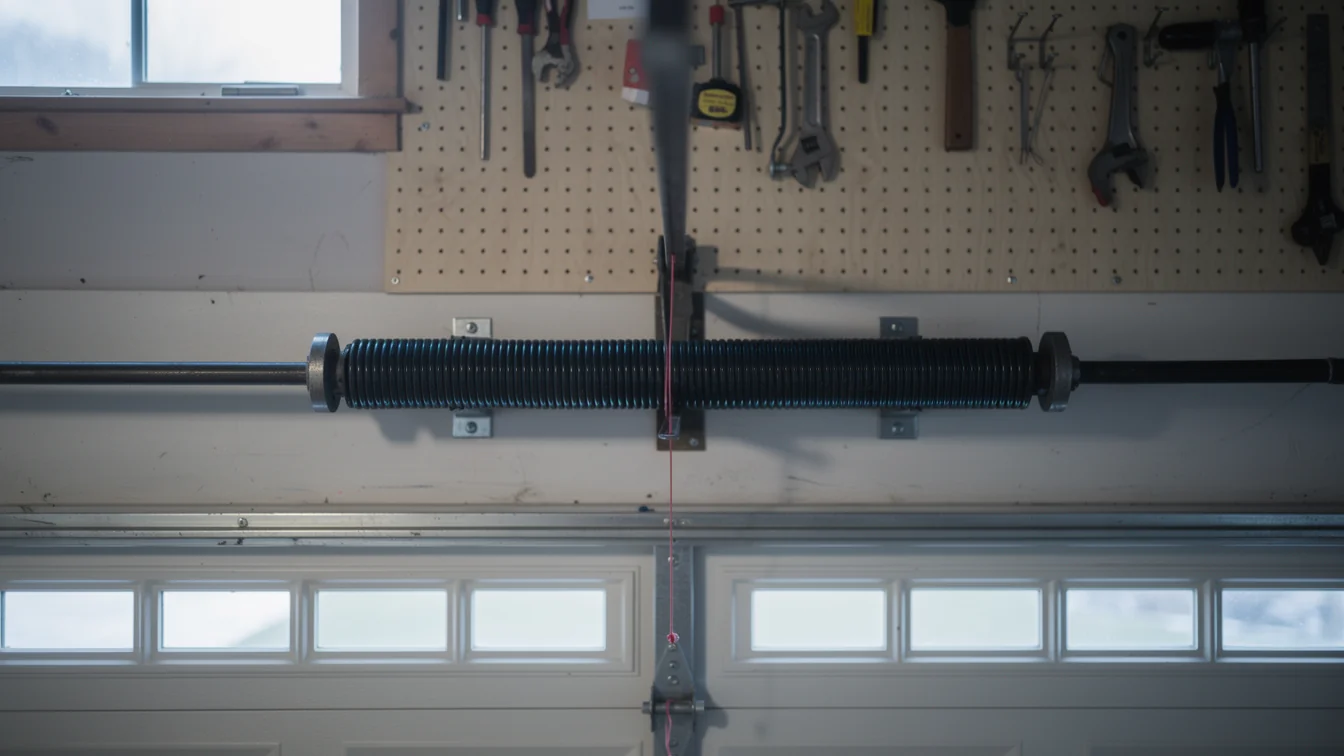
Lake City sits in a mild climate with occasional freeze nights, not the hard, sustained cold that cracks slab and warps track up north, but enough to matter on the specific hardware this town has. When the temperature drops below freezing, a torsion spring that's already decades old - and plenty of them are, given the 1972-1994 build window - gets stiffer right at the coil. Cold steel doesn't flex the way it does at 70 degrees; it just holds tension until it doesn't.
It's not a dramatic swing day to day. Most of the year this climate asks almost nothing of a garage door. But a handful of freeze nights a year is enough to catch owners off guard, especially since the springs on these older doors were sized for a climate that rarely sees that cold to begin with, and nobody's upgraded them since.
What we find
A lot of folks figure a mild climate means a garage door needs less upkeep than it would somewhere with real winters. That's backwards. A door that rarely gets stressed by weather also rarely gets looked at - the spring installed when the house went up in the early 1980s is often the exact spring still carrying the door forty years later, untouched, unlubricated, uninspected.
With a median household income of $47,739 in our service area, a lot of owners put off anything that isn't an emergency. A quiet spring that isn't making noise looks like nothing worth spending money on, right up until the morning it lets go. We get it - it's a reasonable way to budget. But a spring that's original to a 1980s build is past any reasonable service life regardless of how quiet it's been.
How we work
Summer and the shoulder seasons don't ask much of a garage door in this climate. There's no six-month stretch of hard freeze working against the hardware, and no major cold snap that sticks around long enough to do real damage on its own. The season that matters here is the stretch of winter when Lake City gets occasional freeze nights mixed in with otherwise mild days.
That's when a spring installed back when these houses went up - 1972 to 1994, median 1982 - is most likely to let go, because cold steel is brittle steel, and these springs have had decades of cycles behind them already. We'd rather swap a tired spring on a dry October afternoon than get the call on a freeze morning when the door won't open and someone's trying to get to work.
One honest limit: we don't carry every spring size off the truck. Some of the older, oddball dimensions that came standard on houses from the earlier end of that 1972-1994 range take a day or two to source.
Questions
Cold steel loses flexibility, and if your spring is original to a house built in the 1972-1994 window - which covers most homes here - it's already old enough that a freeze night is often the final push. The combination of age and cold is what breaks springs, not cold alone.
It depends on the unit, but given the median build year of 1982 in this area, plenty of openers still in service are well past a normal lifespan. Sometimes a repair makes sense; sometimes the honest answer is that replacement costs less over time than keeping an old one running.
Yes, our service area covers Lake City and the nearby areas of Five Points, Watertown, White Springs, and Fort White. Housing stock and age run similar across all four, which is part of why we see the same spring and hardware issues repeat across the area.
Recommendation
More garage door guides for Lake City homeowners.
Most Lake City garage doors date to the 1970s-90s build boom, before insulation codes existed.
Read more
Most Lake City homes date to 1972-1994.
Read more
Most Lake City homes went up between 1972 and 1994, which means openers built for a grid that didn't cut out as often.
Read moreReady when you are
Lake City Garage Door Pros repairs and installs garage doors, springs and openers in Lake City, FL and the surrounding area.