
Fort White, Lake City
Garage Door Service for Fort White Homes
Garage door repair and install for Fort White, FL, 19 miles from our Lake City shop. Built mostly around 1994 - different hardware than older parts of the area.
How to Book
We're based in Lake City, and Fort White is about 19 miles out - the farthest of the areas we cover, past Five Points and Watertown at 2 miles each and White Springs at 12.
Trip scheduled, not dropped in
That distance means we schedule the trip rather than treat it like a drop-in, so when you call, tell us what the door is doing and we'll work out a time that gets a truck out there without you waiting around all day for a window that might not hold.
No local depot
We don't run a branch or a depot in Fort White itself - every job starts with a drive from Lake City, which is worth knowing if you're comparing us to someone closer.
Straight answer on phone
What we can offer is a straight answer on the phone about what's likely wrong, based on what we see on doors your home's age, before anyone gets in a truck.
Parts We Carry
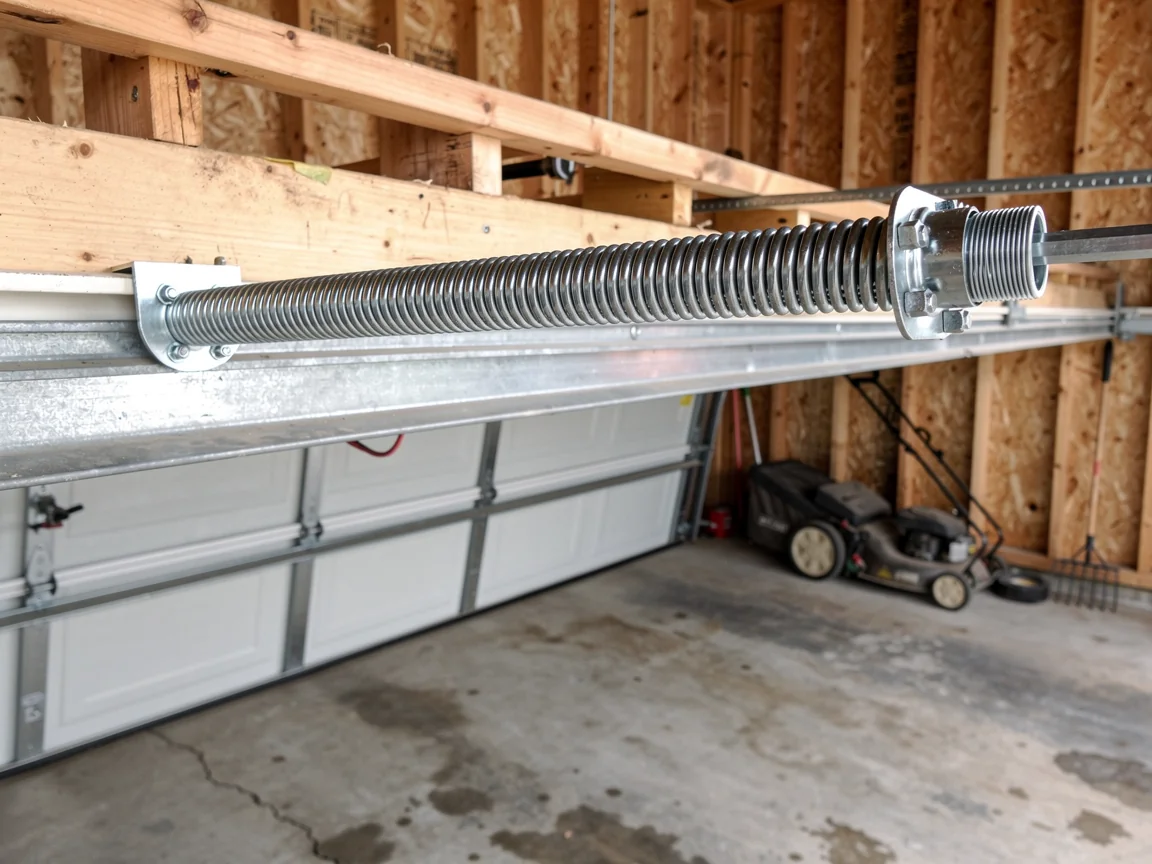
For a town built mostly in the early-to-mid 1990s, the parts list is fairly short and fairly standard. Torsion springs sized for steel sectional doors from that era, the nylon rollers that replaced the older steel ones, standard-width track sections, and opener logic boards that match the common residential models sold through the 90s. We carry what fits the housing stock we actually see, which in Fort White means less guesswork than in older parts of the service area where doors might be original from the 1970s and need a part nobody stocks anymore. That said, we don't keep every opener model on the truck - if your door has a less common brand or a aftermarket setup someone installed later, that part may need to be ordered, and we'll tell you that up front rather than pretend otherwise. One thing worth knowing: a door built in 1994 that's never had its springs replaced is close to or past the end of a normal service life. If you're calling about a slow door, there's a decent chance the fix is the spring everyone else in that era is also due for, not something unusual to your house specifically.
How It Shows Up
Most of the calls we get from Fort White start the same way: the door is slow, or it's loud, or it stops halfway and won't finish the cycle.
Seized roller, not opener
On a 1990s steel door, that's almost always a spring losing tension or a roller that's seized in the track - not the opener, even though the opener gets blamed first. Sometimes it's a cable that's frayed enough to jump the drum, which is a safety issue, not a convenience one, and we treat it that way.
Repeating symptoms house to house
Because the housing stock here clusters tightly around a 1994 build date, the symptoms repeat house to house more than you'd expect - same door width, same spring type, same opener generation. That consistency actually helps on the phone; a homeowner describing a grinding noise on a door from this era is usually describing one of three things, and we can often tell which before the truck leaves Lake City.
Phone diagnosis limitation
The honest limitation: we can't diagnose everything over the phone, and a door that's making a new noise but still opening fine is worth a look before it becomes a door that doesn't open at all.
What Can Go Wrong
A door built around 1994 is old enough now that the original torsion springs are past their rated cycle count on most houses, even ones that look fine from the driveway.
Spring fails on cold morning
That's the single most common call we get from houses this age - a spring that finally lets go, usually on a cold morning or after the door's been run heavy for a while.
Nylon rollers and openers aging
Nylon rollers from that era are also due; they wear down and start binding in the track, which puts extra load on the opener and the cables both. Openers from the mid-90s are reaching the end of their motor life too, and when the gears strip, a lot of owners assume it's the door itself. It usually isn't.
Grease tightening in springs
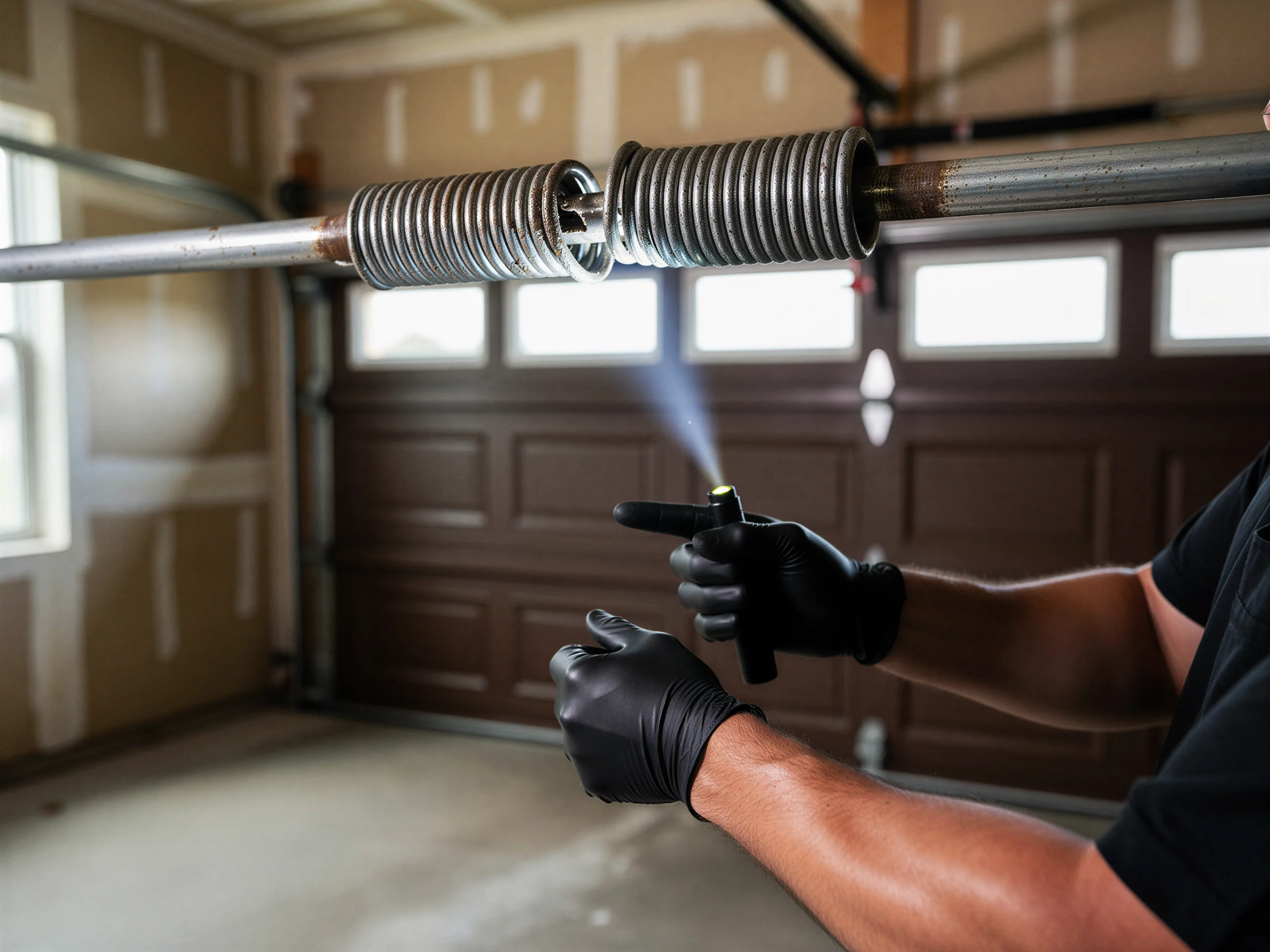
The climate here is mild with occasional freeze, so you don't get the swelling and cracking problems that wood doors see in wetter climates, but a few hard freeze nights a year can tighten up old grease in a spring or hinge enough to cause a stiff, noisy door until it warms back up. None of this is dramatic. It's wear, on schedule, for a door that's been doing its job for three decades.
What You Pay
Fort White has about 252 households, which is small compared to the rest of our service area, and it shows in how the work comes in - one job at a time, not in clusters like you'd get in a denser subdivision.
No volume discount
That matters for pricing because there's no volume discount to hide behind and no reason to inflate a quote either. What you pay depends on the job itself: a spring, a roller set, an opener board, a full door. We don't post a flat number here because garage door pricing swings on the part that failed and whether the hardware underneath it is original or already been swapped once.
Predictable 1994 bracket
What we can tell you is that most of Fort White's housing went up around 1994, which puts the doors and openers in a fairly predictable bracket - newer than the 1970s stock you'll find closer to Lake City, so parts tend to be more standard sizes and less likely to need a special order.
Income range context
Median household income here runs $52,315, a bit above the $47,739 median across the wider service area, which doesn't change what a repair costs but it's worth knowing the range you're in before you call.
Questions
Common questions
Why does my garage door in Fort White need a different spring than my neighbor's house in Lake City?
Most Fort White homes were built around 1994, later than a lot of the wider service area, which runs from 1972 to 1994 with a median of 1982. Newer doors from the 90s tend to use torsion springs sized for standard steel sectional doors, while older houses closer to Lake City sometimes still run original hardware that needs a different, harder-to-find part.
Do you have a shop or truck based in Fort White?
No. We're based in Lake City, about 19 miles from Fort White. Every job out there starts with a drive, which is why we schedule visits rather than offer drop-in service. We'll still work with you on timing - just know the truck isn't starting from down the street.
Is my opener too old to fix?
If your house was built around 1994 and the opener is original, it's at or past the age where gears and logic boards commonly fail. Sometimes a board swap fixes it; sometimes the motor's done and replacement makes more sense than chasing parts for a 30-year-old unit. We'll tell you which one applies after a look, not before.
Explore more
More Services in Fort White
Emergency Garage Door
Fort White homes mostly date to 1994, later than the Lake City service area's 1982 median. Learn more →
Garage Door Repair
Fort White's houses date mostly to 1994, newer than much of the county. Learn more →
Maintenance
Fort White's garage doors mostly date to 1994, newer than much of the Lake City service area - here's what yearly maintenance catches before a spring or bearing fails. Learn more →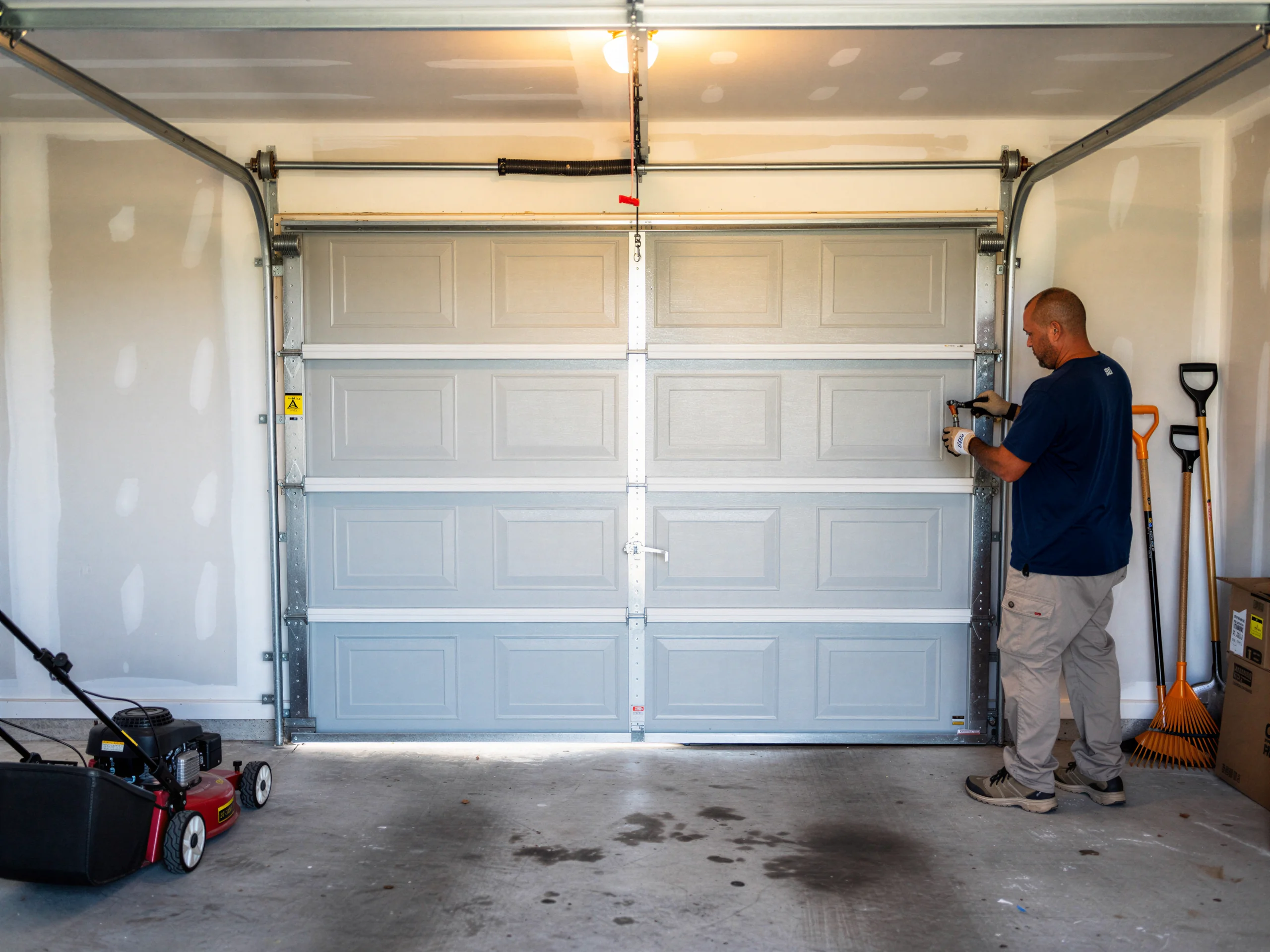
New Door Installation
Fort White homes run newer than most of the service area - 1990s stock, not 1980s. Learn more →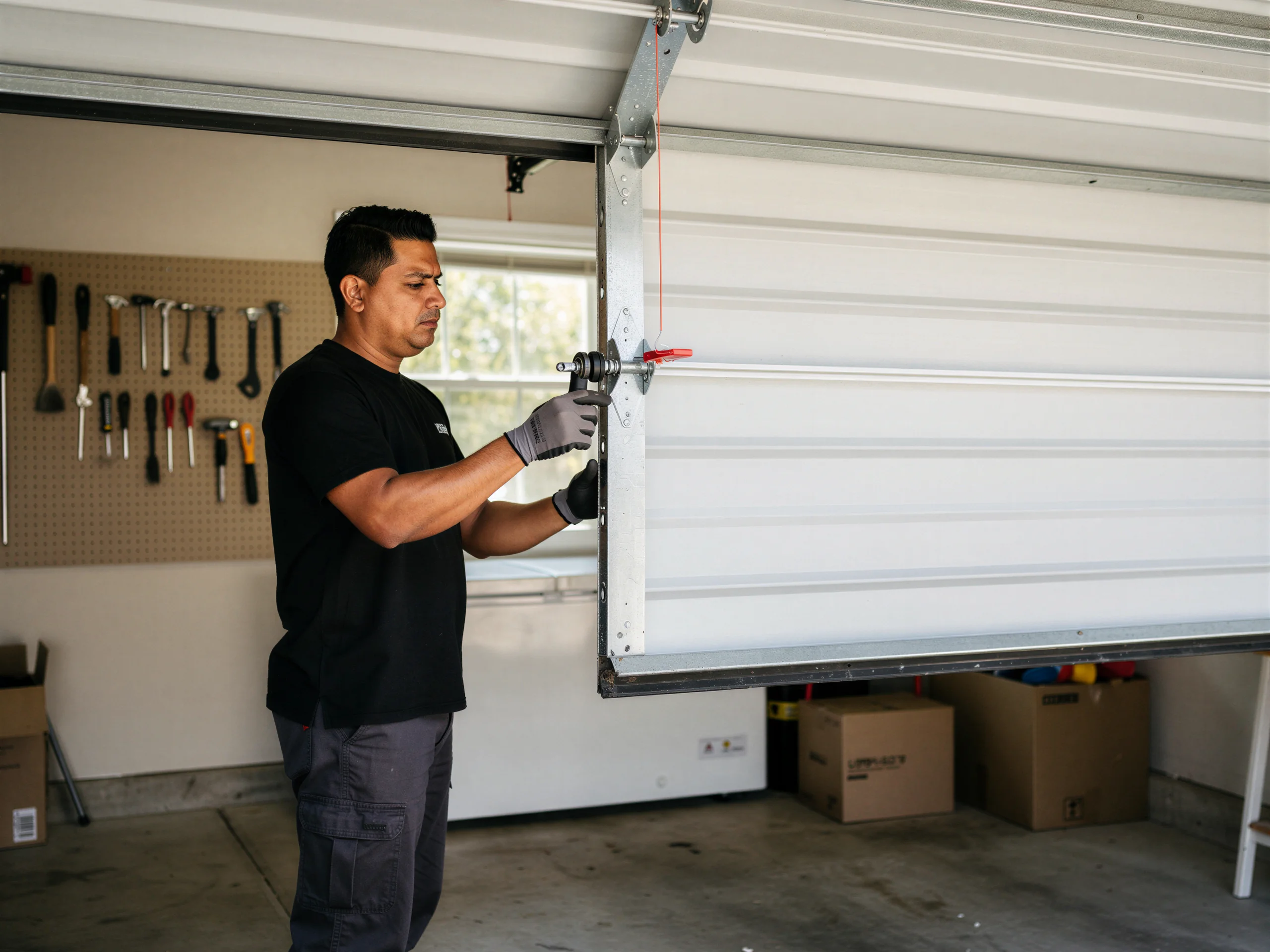
Off Track Repair
Off-track garage door repair for Fort White, FL homes built around 1994 - bent track, worn rollers, loose brackets. Learn more →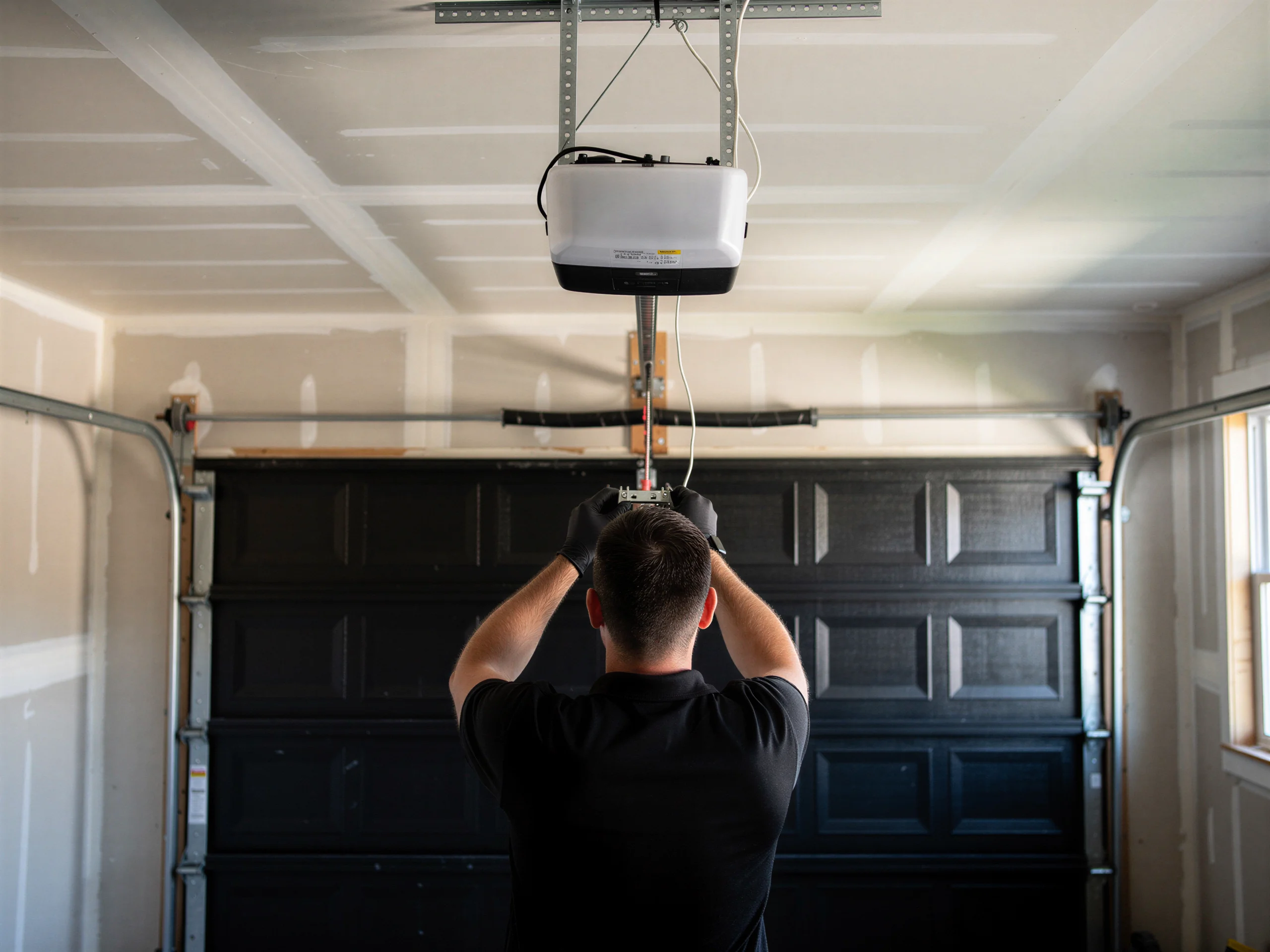
Opener Installation
Fort White's garage doors mostly date to the 1990s building boom - lighter steel, wider openings, and openers that are now 25-30 years old. Learn more →
Roller Replacement
Fort White homes mostly went up in the early-to-mid 1990s, which means nylon rollers on steel track. Learn more →Ready when you are
Need garage door service in Fort White?
Lake City Garage Door Pros repairs and installs garage doors, springs and openers in Lake City, FL and the surrounding area.